.png)
Pontoon Boat vs. Fishing Boat: Which Is Right for Ontario Waters?
The best boat for Ontario lakes depends on what you actually plan to do on the water, and the answer is not the same for every buyer. A family of five spending summer weekends on Lake Erie and a solo angler working the weed edges of a bass lake have completely different needs, even if they are both looking for a boat in the same price range.
Pontoon boats and fishing boats are the two most popular categories for Ontario recreational buyers, and they overlap more than most people expect. Both can fish. Both can carry passengers. But they do it differently, and choosing the wrong one means spending your season compromising on the things that matter most to you.
This guide gives you a direct, honest comparison of both categories, covers how Ontario's lakes influence the decision, and walks through a capacity guide so you can match a boat size to how you actually use it.
Ready to browse? See our current marine inventory at The Power Garage in Woodstock, Ontario, including Avalon pontoons, Skeeter bass boats, and a full range of fishing and family boats.
Browse Marine InventoryPontoon Boat vs. Fishing Boat: A Direct Comparison
The Basics: What Each Boat Is Built To Do
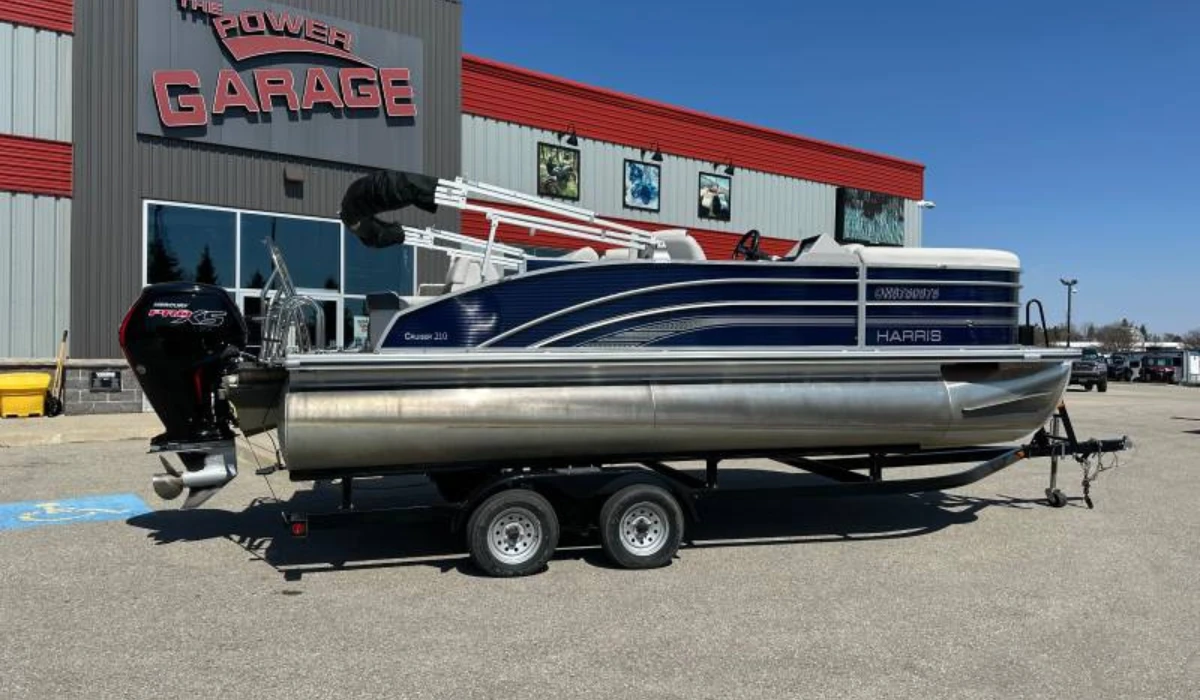
A pontoon boat is built on two or three aluminum tubes (pontoons) with a flat deck on top. That platform provides exceptional stability, generous seating, and a wide open layout that works well for groups, entertaining, and casual on-water time. Pontoons sacrifice some speed and handling agility in exchange for comfort and capacity.
A fishing boat, whether a bass boat, aluminum fishing boat, or multi-species rig, is built around fishing performance. Lower profiles, more rod storage, purpose-built livewells, and hull designs that prioritize efficiency and handling in varying water conditions. Fishing boats are generally faster, more maneuverable, and purpose-matched for anglers who want to cover water and target species.
Where it gets interesting: many modern pontoons fish surprisingly well, especially for trolling, casual walleye fishing, and family days that mix fishing with swimming. And many fishing boats carry passengers comfortably for shorter trips. The question is how much you are willing to compromise on either side.
| Category | Pontoon Boat | Fishing Boat | Best For |
|---|---|---|---|
| Seating & capacity | 8 to 12+ passengers standard, wide open layout with full wrap seating | 2 to 4 passengers, purpose-built seating for anglers, not groups | Pontoon for families; fishing boat for fishing-focused buyers |
| Stability | Exceptional, two or three pontoon tubes create a very stable platform in calm to moderate conditions | Good, lower centre of gravity but narrower beam; less stable in wakes and chop | Pontoon for mixed use and passengers; fishing boat for boat control |
| Speed & performance | 20 to 30 mph typical, more than enough for cruising and light water sports | 45 to 70+ mph for bass boats, much faster; better fuel efficiency at lower speeds | Fishing boat for covering water quickly; pontoon for relaxed cruising |
| Fishing capability | Good for trolling, casual fishing, and family fishing days, lacks tournament-level features | Excellent, purpose-built livewells, rod storage, trolling motor mounts, and electronics platforms | Fishing boat for serious anglers; pontoon for casual or mixed fishing |
| Storage | Ample under-seat storage for gear, coolers, and accessories | Dedicated rod lockers, tackle storage, and dry storage, purpose-organized for fishing | Equal, different types of storage for different priorities |
| Trailering & launching | Wider beam requires appropriate trailer and launch ramp width, manageable but less agile | Narrower profile, easier to launch, retrieve, and maneuver in tighter ramps and marinas | Fishing boat is easier to trailer and launch in busy conditions |
| Entry price range | Generally higher for equivalent size, larger boats cost more to build | Wide range, aluminum fishing boats start lower than comparable pontoons; fibreglass bass boats vary | Fishing boat for budget entry; pontoon for premium family experience |
| Fuel economy | Moderate, heavier platform requires more power to move | Better at planing speeds, lighter hull and efficient design | Fishing boat generally more fuel efficient for the same use |
Quick Decision Guide
Choose a pontoon if: you prioritize passenger comfort, plan to entertain on the water, want a family-first boat that also fishes, or primarily cruise and swim with occasional fishing mixed in.
Choose a fishing boat if: fishing is the primary purpose, you want to cover water quickly, you need purpose-built fishing features, or you typically fish with one or two people rather than a full group.
Ontario Lake Conditions: Which Hull Type Handles Local Waterways Best
Ontario's lakes vary enormously, from the Great Lakes and large inland lakes that generate significant wave action and open-water chop, to sheltered bays, river systems, and smaller lakes where conditions are calmer, and depth is the bigger consideration. The type of water you primarily fish or boat on should influence your hull choice.
Ontario Waterway Guide: What Each Boat Handles Best
| Water Type | Pontoon Boat | Fishing Boat |
|---|---|---|
| Great Lakes (Erie, Huron, Ontario) | Manageable in calm to moderate conditions; avoid open water when 2+ foot chop is forecast. Tritoon (three-tube) handles better in wave action. | Bass boats and multi-species rigs handle open-water conditions well at speed; fibreglass hull preferred for rough water |
| Large inland lakes (Simcoe, Nipissing, Kawartha chain) | Excellent; these lakes are the sweet spot for pontoon boating in Ontario. Calm morning water, afternoon breeze manageable. | Both aluminum and fibreglass fishing boats handle these lakes comfortably, most common setting for Ontario fishing boats |
| Sheltered bays and backwaters | Excellent, pontoons shine in calm, sheltered water with room to maneuver | Aluminum fishing boats are ideal here. Lighter, shallower draft, easier to get into tight spots |
| Rivers and shallow waterways | Limited, pontoon draft and beam width restrict access | Advantage fishing boat, especially aluminum jon boats and shallow-draft designs |
| Small local lakes near Woodstock | Both work well; Oxford County lakes are typically sheltered. Pontoon for family use; fishing boat for targeting bass and walleye. | Both work, the choice comes down to purpose, not conditions |
If you want a pontoon but plan to use it on larger Ontario lakes where wave action is a factor, Lake Erie in particular, consider stepping up to a tritoon (three-tube) model. The third tube significantly improves stability and handling in chop. Avalon's tritoon range is a popular choice for Ontario buyers who want the pontoon lifestyle with better open-water performance.
Capacity Guide: What Size Boat Do You Need for Your Family or Fishing Crew?
Boat size is one of the most common areas where Ontario buyers underestimate what they actually need. People think about the boat they have today, and forget to account for the people and gear they'll have next season. Here is a practical sizing guide based on how the boat will be used:
| Your Situation | What to Look For, and Where to Find It |
|---|---|
| Solo angler or fishing with one other person | An aluminum fishing boat in the 14 to 17-foot range is the most practical and economical choice. Easy to trailer, low fuel cost, easy to launch alone. See: Fishing boat inventory |
| Family of 3 to 4, mixed use (fishing and recreation) | A pontoon in the 20 to 22-foot range or a multi-species fishing boat with passenger seating works well. If fishing is secondary, go pontoon. If fishing is primary with occasional family days, consider a multi-species or walleye boat with seating. See: Pontoon boat inventory |
| Family of 5 or more, primarily recreational | A pontoon in the 22 to 26-foot range is the right fit. Look for models rated for 10 or more passengers with full wrap seating, a changing room, and a built-in bimini top. An Avalon in this size range is a strong option for Ontario families. See: Avalon pontoon inventory |
| Tournament angler or serious bass fishing | A dedicated bass boat, Skeeter or similar, is purpose-built for this use. 18 to 21 feet, high horsepower, aerated livewells, and a low-profile hull that gets on plane fast. See: Bass boat inventory |
| Mixed group, some fish, some don't | A tritoon pontoon is often the best compromise for Ontario families where some members fish and others don't. Wide casting decks fore and aft, fishing-ready features, and still comfortable for passengers. See: Pontoon boat inventory |
| First-time boat owner, uncertain of use | Start with a versatile aluminum fishing boat in the 16 to 18-foot range. Lower initial cost, easier to manage, and gives you a season on the water to understand exactly what you want before stepping up. See: Full marine inventory |
Choose one size larger than your current group. Kids grow, friends get invited, and gear accumulates. The most common feedback we hear from buyers who went smaller than they considered: they wish they had stretched the budget for the next size up. The cost difference between a 20-foot and a 22-foot pontoon is usually less than people expect.
Browse our current pontoon boat inventory, our bass boat inventory, or search all marine inventory to filter by size, brand, and price range. Our team in Woodstock is available to answer questions in person or by phone.
Upgrading from a current boat? We accept trade-ins on all makes and models, including boats you did not purchase from us. Get a free trade-in estimate and apply the value directly to your next purchase. Financing available through The Power Garage Finance Department.
Find Your Boat at The Power Garage
Pontoons · Fishing boats · Bass boats · Avalon · Skeeter · Hurricane · Woodstock, Ontario
Frequently Asked Questions: Pontoon Boat vs. Fishing Boat in Ontario
It depends on how you plan to use it. For family days, entertaining, and mixed recreation on Ontario's calmer inland lakes, a pontoon is hard to beat, especially in the 20 to 24-foot range. For dedicated fishing, covering water quickly, or tournament-style bass fishing, a purpose-built fishing boat gives you the performance features that matter. Many Ontario buyers end up owning both at different stages, but if you have to choose one, the answer comes down to whether fishing or family recreation is the primary use.
Yes, and many Ontario anglers do exactly that. Modern pontoons are increasingly fishing-friendly, with trolling motor mounts, rod holders, and fishing-ready front decks on many models. They are well-suited for trolling for walleye, perch fishing, and casual bass fishing on sheltered lakes. They are not the right tool for serious tournament fishing, covering large areas of open water quickly, or situations where you need the features of a dedicated bass boat.
Avalon is one of the most popular pontoon brands among Ontario buyers, well-built, competitively priced, and available in a wide range of sizes and configurations, including tritoon models that handle open-water conditions better than standard two-tube pontoons. For larger Ontario lakes like Erie or Huron where wave action is a factor, a tritoon in the 24 to 26-foot range with a higher horsepower rating is worth considering. Our team in Woodstock can walk you through the current Avalon lineup and match you to the right model for your intended waters.
New pontoon boats in Ontario typically start in the $30,000 to $40,000 range for a basic 20-foot model and climb to $80,000 or more for premium tritoon configurations with high horsepower and full feature packages. Used pontoons offer significant savings; a well-maintained 5 to 8-year-old pontoon from a quality brand can be an excellent value. Financing is available through The Power Garage Finance Department, and trade-in value from your current boat can be applied directly to the purchase.
For two people fishing Ontario's inland lakes, a 16 to 18-foot aluminum fishing boat is a practical and economical choice. It is easy to single-hand at the launch, fuel-efficient, and gives you access to tighter spots that larger boats cannot reach. If you are targeting bass on tournament circuits or want more speed on open water, a 19 to 21-foot fiberglass bass boat like a Skeeter gives you the performance platform to do it properly.
A valid Pleasure Craft Operator Card (PCOC) is required to operate a motorized vessel in Ontario, including pontoons and fishing boats. You can obtain it by completing an accredited boating safety course and passing the test, which is available online through Transport Canada-approved providers. The test covers rules of the water, navigation, and safety equipment requirements. First-time buyers are required to have this in place before they operate their new boat.
The Power Garage Marine Sales Team
Pontoon and Fishing Boat Specialists, Woodstock, Ontario
Our marine sales team has helped Oxford County families and anglers choose the right boat for their waters since 2007, representing Avalon, Skeeter, Hurricane, iKon, G3, and Mirrocraft.
The Power Garage · 99 Montclair Drive, Woodstock, ON N4V 1C5 · 519-533-1300 · thepowergarage.ca
.png)

.png)